
 In the algorithmically governed landscape of modern search, visibility is not a matter of chance but of technical precision and strategic alignment. For businesses, an SEO audit is the equivalent of a comprehensive diagnostic scan, moving beyond guesswork to deliver a data-driven blueprint for organic growth. Often viewed as a mere technical exercise, the audit’s core power is its ability to tie specific actions directly to proven boosts in rankings, traffic, and income. Here, we investigate the proven results from methodical SEO audits, making a powerful case for their status as an essential tool for business insight.
The Tangible Cost of Technical Debt
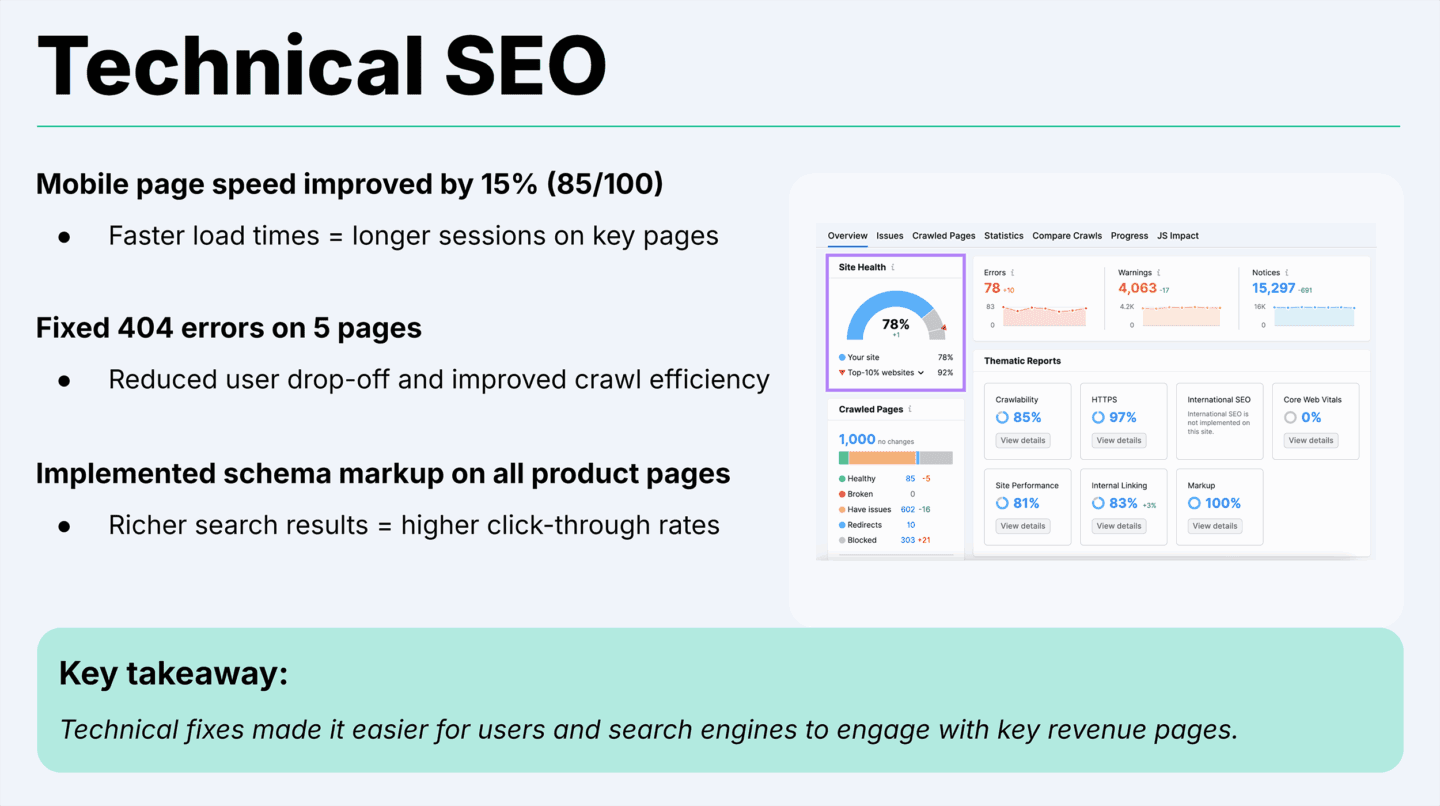
Technical SEO issues are silent revenue killers. These issues produce barriers that prevent search crawlers from accessing content, which immediately restricts a website’s organic reach. Information repeatedly shows how common and damaging these faults are. A 2023 study by Ahrefs analyzing over 1 billion web pages found that a staggering 91.5% of all pages get no organic search traffic from Google. Although technical problems aren’t the only cause, Core Web Vitals and crawlability troubles are major factors.
Consider the direct metrics:
Crawl Budget Waste: For big websites, 404 errors, faulty redirects, and blocked assets can waste 15-30% or more of the crawl budget a search engine assigns, stopping key pages from getting indexed.
Indexation Bloat: Websites often suffer from indexation bloat, with 20-35% of pages being low-value, duplicate, or thin, thereby weakening ranking signals and causing self-cannibalization.
Page Experience Penalty: The Page Experience update from Google, which includes Core Web Vitals, turned user-focused metrics into a direct ranking signal. Research indicates pages hitting the “good” benchmarks for LCP and CLS gain an average 10-15% rise in organic visibility compared to underperforming pages.
The inference is unavoidable: technical debt that is not fixed sets a rigid limit on a site’s organic potential. An SEO audit pinpoints these leaks with exact accuracy, highlighting corrections that free a site’s capacity to be discovered and ranked.
Content Gap Audits: Shifting from Speculation to Smart Investment
Apart from the technical setup, an SEO audit transforms content strategy away from personal opinion and toward factual analysis. By leveraging tools to analyze current rankings, competitor landscapes, and search intent, audits uncover high-opportunity gaps. The objective is to synchronize content development with verified user need.
Key data points illuminate this process:
Keyword Cannibalization: Frequently, websites possess numerous pages going after the identical core keyword, leading to search engine confusion and diluted ranking strength. An audit often finds 5-10 cases of cannibalization on medium-sized websites, with each one being a missed chance to build consolidated authority.
Search Intent Mismatch: Data from platforms like SEMrush indicates that pages aligning perfectly with user intent (informational, commercial, navigational, transactional) are 3x more likely to rank on the first page. Audits measure these mismatches; for example, a transactional product page appearing for a “how-to” informational search, resulting in elevated bounce rates and low conversions.
ROI of Content Refresh: An analysis from Backlinko revealed that revitalizing and republishing outdated content yields an average 111.8% boost in organic visits. The audit finds these older properties—pages with dropping traffic yet holding backlinks and authority—delivering a precise guide for content updates with great ROI, replacing non-stop new production.
The logical outcome is that a metrics-driven content audit turns the editorial calendar from a release timetable into a strategic investment portfolio, focusing resources on the most promising pages and topics.
Benchmarking Against Competitors: The Audit as Market Insight
You cannot perform an SEO audit in a bubble. Its strongest revelations frequently originate from analyzing competitors. By examining the technical setup and content approaches of leading competitors, a company can pinpoint not only its flaws but also the exact advantages it needs to copy or exceed.
Quantifiable competitive insights include:
– Backlink Gap Analysis: Comprehending a competitor’s higher ranking frequently relates to link authority. SEO audits can show a shortfall of hundreds or even thousands of backlinking domains, delivering a precise inventory for outreach campaigns.
– Featured Snippet & SERP Feature Analysis: For high-competition keywords, a large share of clicks frequently lands on the featured snippet or other rich results. An audit determines which rivals hold these valuable spots and what page structure (tables, lists, brief answers) they employ to get them.
– Technical Benchmarking: Comparing Core Web Vitals scores, mobile responsiveness, and site structure against competitors provides a market-standard benchmark, moving performance goals from abstract (“faster”) to concrete (“match Competitor X’s LCP of 1.2 seconds”).
This audit component determines that benchmarking is a type of strategic intelligence gathering, transforming leader successes into a workable strategy.
The Combined Effect and Return on Investment
The ultimate value of an SEO audit is its aggregate impact. Addressing a single technical issue may yield a minor lift, but a coordinated correction of interrelated problems—improving site speed while fixing crawl errors and optimizing key content—creates a compound effect. Business case studies demonstrate that a complete audit and execution can result in 40-150% growth in organic traffic in 6-12 months, alongside similar gains in leads and sales.
The concluding, data-proven finding is evident: an SEO audit represents a crucial investment in your foundation, not merely an expense. It exchanges ambiguity for a quantified, prioritized strategy. Given that organic search continues to be the primary source for high-intent customer acquisition, the audit is the indispensable starting point for capturing and increasing your digital share.
Common Questions
Q: What is the recommended frequency for a full SEO audit?
A: A full, deep-dive audit should be conducted at least annually. However, limited audits targeting technical performance and key content need to be executed quarterly, because search engine algorithms and rival tactics are always shifting.
Q: Is it possible to perform an SEO audit in-house, or is an expert required?
A: Simple audits can be executed with platforms including Google Search Console, Ahrefs, and SEMrush. Yet, a specialist offers skill in analyzing data, linking unrelated problems, and giving strategic focus. Your site’s complexity and how competitive your niche is are vital considerations for this choice.
Q: After an audit, what is the most critical metric to watch?
A: Although organic visits are the end target, rankings for non-branded organic keywords in your}
In the event you loved this short article and you would love to receive more information regarding seo analysis service generously visit the webpage.
